Welcome to STAT 218!
Merhaba!
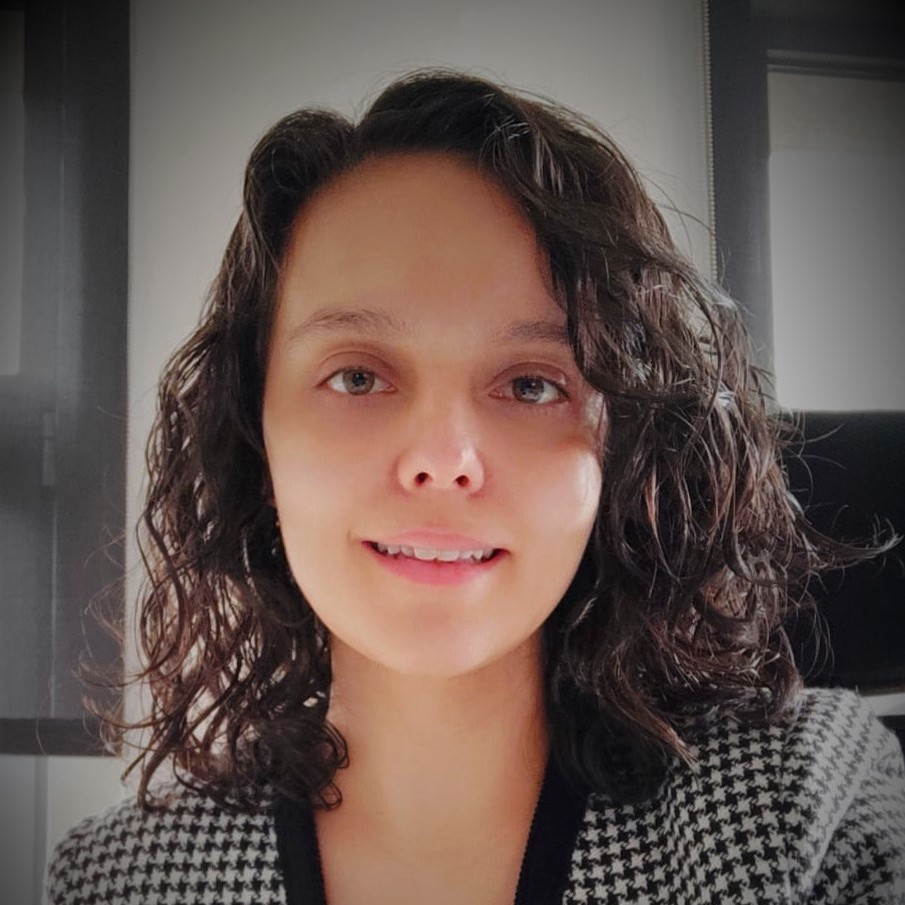
Dr. Sinem Demirci (she/her)
025-213
sdemirci@calpoly.edu
Instructor’s office hours:
Tue: 01:10 PM - 02:50 PM (In-Office)
Wed: 11:10 AM - 12:00 PM (In-Office)
Thu: 01:10 PM - 02:00 PM (In-Office)
Today’s Menu
In this lecture, I will be briefly talking about
- Syllabus and Course Structure
- What is Statistics?
- A Soft Introduction to Week 1
Course Website and Syllabus
We have a course website to organize and manage our course materials.
Tip
Please refresh the page each time you open the website to ensure you are viewing the most up-to-date version.
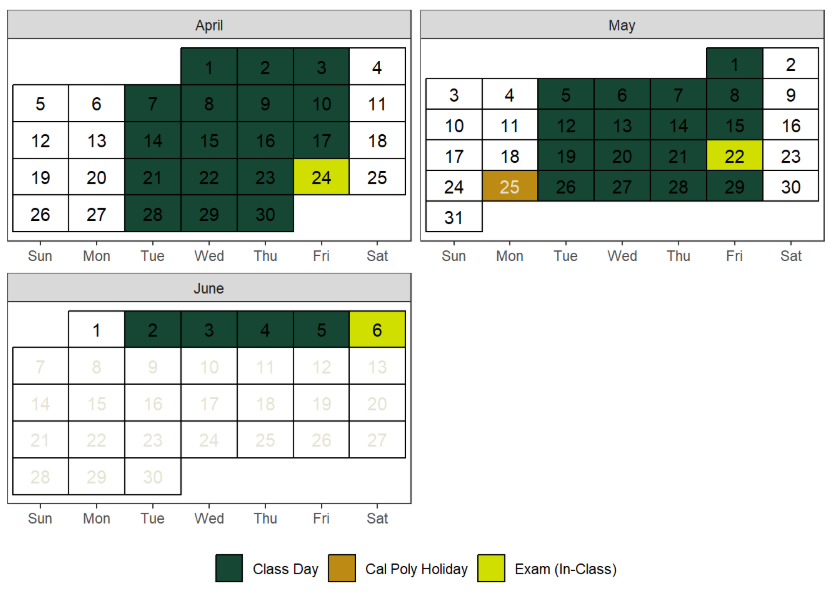
Schedule
Textbooks
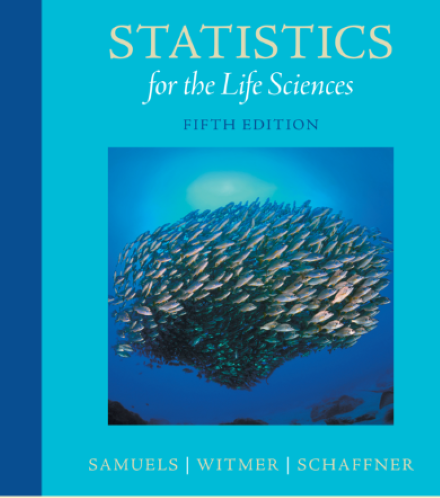
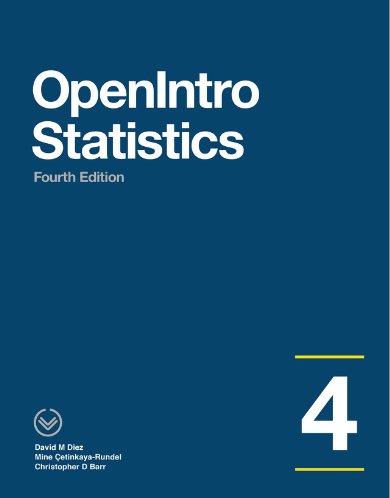
- Where can I get a copy of this book?
- There are few options that I found
- Cal Poly Mustang Shop
- Course Reserves
- Pearson - you can subscribe for 4 months
- Cal Poly Textbook Facebook page: Rumor is that there is such a Facebook page where students sell textbooks at low prices.
- Cal Poly Mustang Shop
- There are few options that I found
Assessment
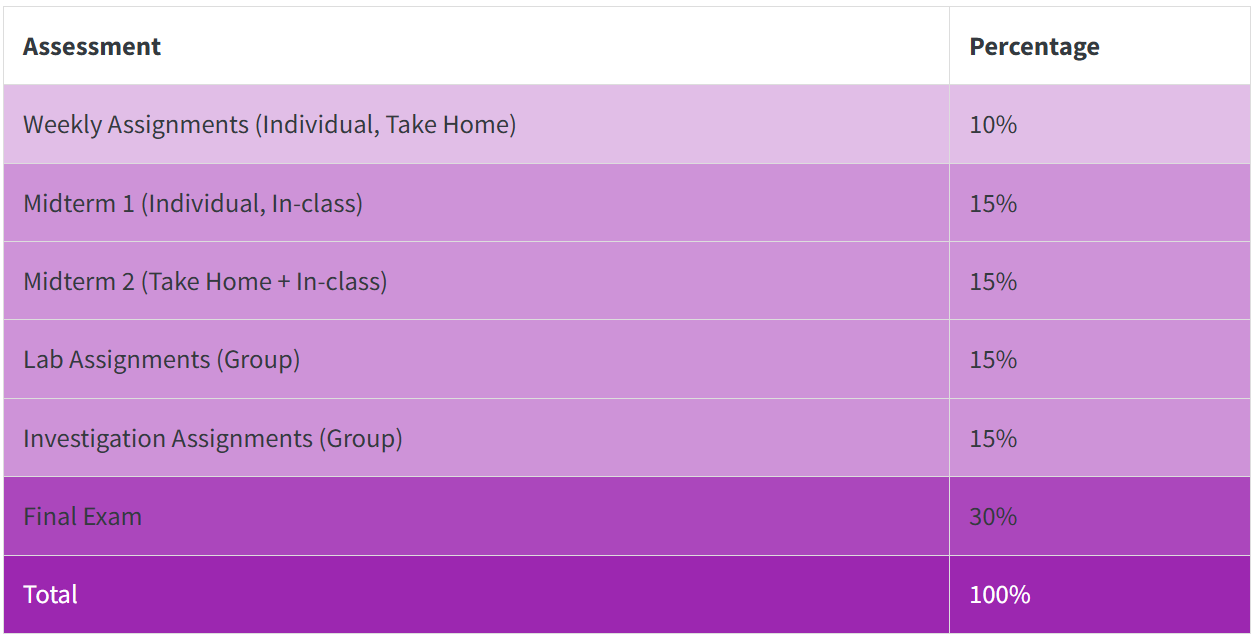
More on Investigations (Group Assignments)
There will be ‘Investigation Sessions’ every Wednesday to be completed (hopefully) within classroom time.
You are encouraged to work in groups on these assignments. Each group should be composed of 2-3 students to work and complete them together both in the class and/or after the class.
It will…
- focus more on a key statistical concept.
- be turned in one write-up with all of your names.
All investigation assignments are due Fridays by 11:59 pm.
You may work either the same group members or shuffle around.
More on Lab Assignments
There will be ‘Lab Sessions’ on Fridays to be completed (hopefully) within classroom time.
- Lab sessions will be conducted in groups, and the lab assignments will also be group projects.
- Each group is composed of 2-3 students to work and complete the labs together both in the class and/or after the class.
- Lab sessions will be conducted in groups, and the lab assignments will also be group projects.
All lab assignments are due Tuesdays by 11:59 pm.
You may work either the same group members or shuffle around.
We will use R programming language.
In brief…
Tuesday & Thursday: Lecture-based approach
Wednesday & Friday: Learn-by-doing approach
A Note on Attendance and Participation
Attendance
I will record attendance during every lecture, not for grading purposes, but to track your learning progress in this class.
- In case of recurring absences, I will reach out to understand the reasons and work together to find solutions.
A Note on Attendance and Participation
Participation
Your active involvement enriches our learning environment and enhances everyone’s experience.
It isn’t about speaking up every day; it’s about actively engaging with the material and activities.
I respect that everyone participates in differently.
In brief, you must be present in our classroom (both physically and mentally) unless you have an “Excusable” Reason for Missing Class
- Please contact with me in advance if you are not coming and do your best to catch up
Frequently Asked Questions
How can I call my professor?
- Dr. Demirci (Dr. Deh-meer-jee)
- Prof. Demirci
- Dr. D.
Why didn’t you answer my email?
I usually respond within 48 hours. If you haven’t heard back…
- Your email might have taken a detour.
- You used a personal email address, and I thought it was a secret agent (from: undercover_hero@gmail.com).
- PLEASE USE YOUR CAL POLY EMAIL ADDRESS AND INCLUDE YOUR NAME AND THE COURSE YOU’RE IN.
- Please e-mail again after 48 hours.
Is there any study guide for this course?
- Study daily.
- The feeling of learning does not guarantee retention.
- Even if everything felt crystal clear that day, studies show that it is temporary. Don’t let it mislead you.
- The feeling of learning does not guarantee retention.
- Read the materials before coming to the lecture.
- It’s normal—part of the learning process—not to understand every single sentence.
- Ask questions!
- Come to my office hours (chocolate might be available).
Can we use AI tools in this course?
- Yes and No. Please read our AI policy very carefully to avoid any unintended consequences.
I have math anxiety (alt text: not a tech-savvy person). What can I do to pass this class?
Please talk to me!
I’m designing this course to be more conceptual and less algebraic. You can:
- Mute your inner critic.
- Come and ask for help.
- Believe in yourself.
We can do this together!
What if I ask a stupid question?
There are no stupid questions!
I love seeing the variability in your answers—it helps me understand your learning patterns and improves my lectures.
I track participation, not correctness.
Are you rounding up our grades at the end of the quarter?
Nope! But during the quarter…
- I offer extra credit opportunities.
- I might curve grades if the class average is too low.
I am switching my major. Can you give me a B+?
- REMEMBER! This is your responsibility to study this lecture and get a B+.
I can’t help you in Weeks 7, 8, or 10, or during final weeks.
If you’re switching majors, let me know in advance so I can provide extra office hours or materials to help you maximize your grade.
Why are we using the R Programming Language?
It’s a computer language used by Homo sapiens to communicate with computers. Every college graduate/researcher/professional should have a basic programming literacy in the 21st century.
We will NOT learn how to code from scratch.
We’ll learn the nature of the language and modify basic codes by changing dataset names and variable names.
Do we have to shuffle our groups every week?
No, but…
- Sometimes students don’t share the workload equally.
- Some group dynamics might not work.
If you’re happy with your group, feel free to stick together for all investigations and labs.
Can I work individually?
Yes, but…
- It could be overwhelming as tasks are designed for 2-3 people.
- You should learn how to work in a group.
- Let me know if you do not want to work alone but didn’t find any groups.
What is Statistics, Dr D.?
If we were all exactly the same, most statistical methods would be of little use.
But we are not!!
- This creates situations involving uncertainty and natural variation.
What is Statistics, Dr D.?
Statistics is a collection of procedures and principles for gaining and analyzing information to educate people and help them make better decisions when faced with uncertainty.
Science of Uncertainty
Science of Certainty

What Are the Building Blocks of Decision Making?
Data and evidence form the foundation of most decision-making processes.
I keep hearing “data” everywhere. What are they?
- Datum vs. Data
- recorded values, whether numbers or labels, together with their context are called data.
- are often organized into a data frame
Hold on, what is a “Data Frame”?
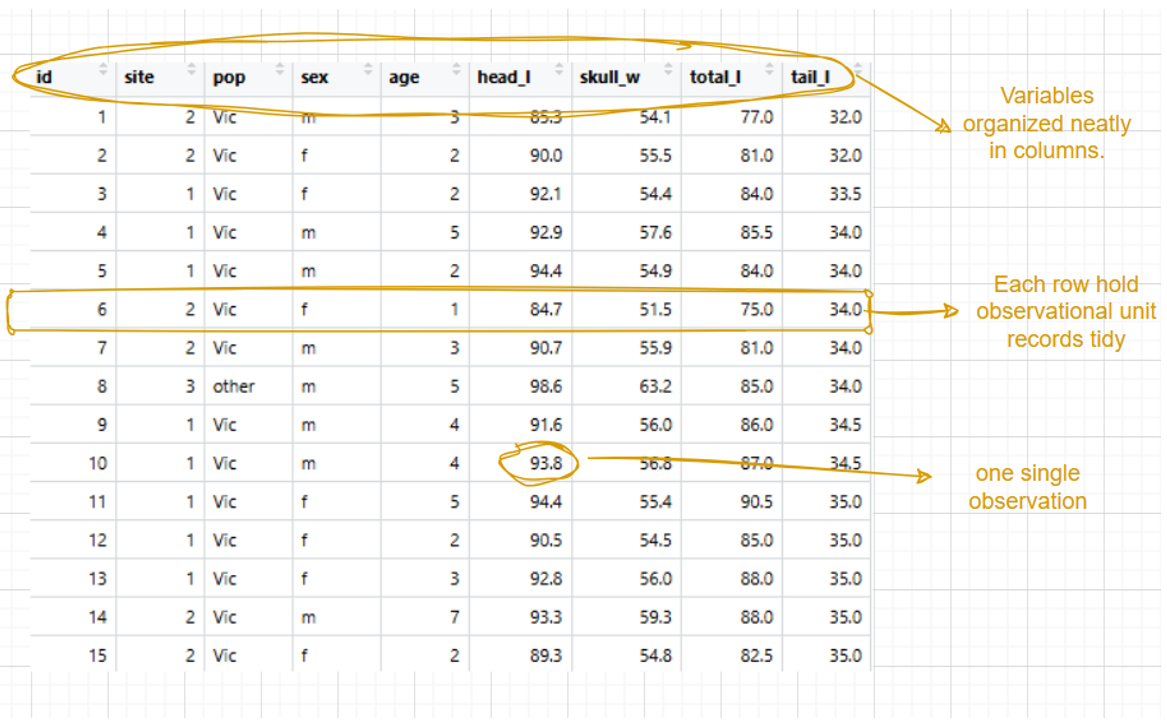
What is an Observational Unit?
- The person or thing being measured.
- Case, study subject, experimental unit are other names for it.
What is a “Variable”?
- Any characteristic of a person or thing that can be assigned a number or category.
Categorical Variable
When a variable names categories and answers questions about how cases fall into those categories, it is called a categorical variable.
- e.g., eye color (green, blue, brown)
may only have two possible values (like “yes” or “no”).
- We call them binary variables.
may be a number like a zip code.
Quantitative Variable
When a variable has measured numerical values with units and the variable tells us about the quantity of what is measured, it is called a quantitative variable.
e.g., temperature (F or C), speed (mph)…
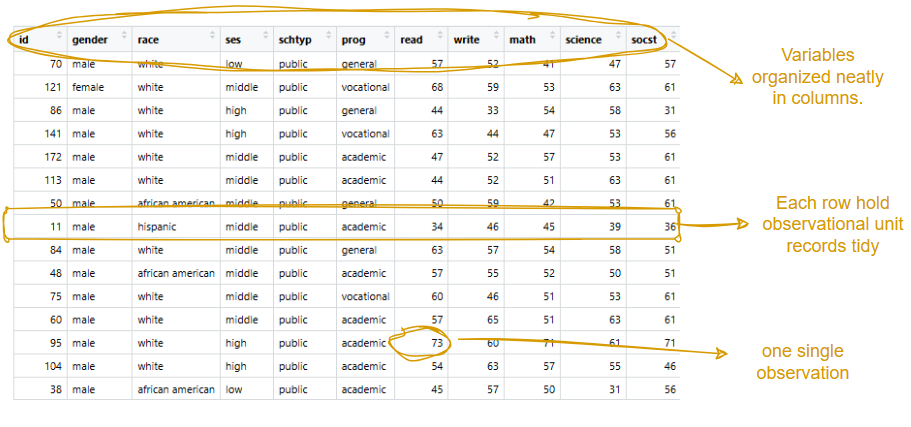
Data Frame/Matrix Revisited
What Are the Data Sources?
Data can be obtained:
Through research
- Experiments
- Observational studies
- …
From information collected by public or private agencies
From online sources (e.g., websites, databases)
But…
Data alone can’t make good decisions. We need a solid approach.
You said “evidence” somewhere? 👀
Example: A man on the news got mercury poisoning from eating swordfish, so the average mercury concentration in swordfish must be dangerously high.
- What type of evidence is this?
- Is it authentic and verifiable?
- Could it be an exceptional case?
What is Empirical Evidence?
In applied statistics, analyses are typically based on empirical evidence!
To get that, one must collect data from scientific studies such as
- Observational study
- Randomized experiment
- Survey
- And many more complicated studies within and beyond the scope of statistics (meta-analysis, qualitative research methodologies etc)…
We’ll describe them later this week.
What am I doing here?
- By the end of this course, I hope to increase your statistical literacy and data literacy. In the best-case scenario, I will support you in decision- making process and making sense of uncertainty through the use of statistics.
- STAT 218 is tailored for life science students who will inevitably engage with Statistics in their future professions.
What about tomorrow?
Our first investigation day! Bring your laptop/iPad/Chromebook.
Extra Activity
Decide on what type of study, survey, observational study or experiment?
- Who has more support among “likely voters”?
- Who uses Instagram more: men or women?
- Does smoking during pregnancy increase the risk of having a premature baby?
- Does aspirin prevent heart attacks?